Key Takeaways
Dubai's demand for upfront rent cheques is a legacy of the 2008 financial crisis, creating a major hurdle for tenants who are paid monthly.
Landlords prefer post-dated cheques as a form of security against tenants leaving the country and to simplify rent collection.
This system creates massive upfront costs for renters (rent, security deposit, agency fees), limiting access to desirable housing.
"Rent Now, Pay Later" services like Rently UAE solve this by paying your landlord upfront, allowing you to move in now and pay your rent in monthly installments.
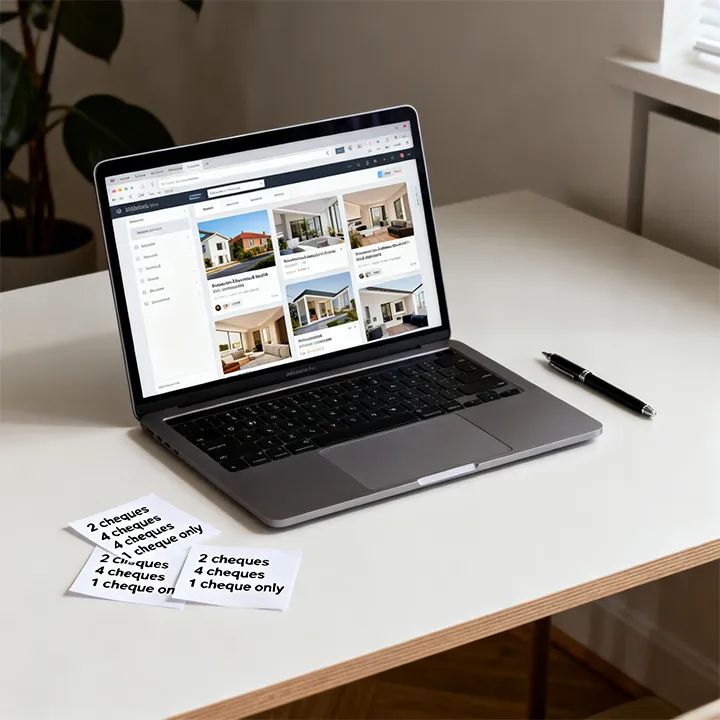
You've just landed a job in Dubai or are a recent graduate ready to move out on your own. You pull up listings on property portals, find a decent studio within your budget, and reach out to the agent — only to be told: "Maximum 4 cheques." You try another. "Minimum 2 cheques." Another: "One cheque only."
If you earn a monthly salary, this system feels like a wall. You get paid monthly, so why should you have to pay rent quarterly or annually? For many freelancers, entrepreneurs, and young professionals, the demand for multiple post-dated cheques feels like a way to gatekeep decent housing, reserving it for those with large upfront savings.
It's a common frustration. But Dubai's post-dated cheque system didn't emerge out of spite. It has deep roots in the city's economic history. Understanding why it exists is the first step to navigating it successfully.
The Ghost of the 2008 Financial Crash
To understand why landlords here are so insistent on upfront cheques, you need to go back to 2008.
When the global financial crisis hit, Dubai was in the middle of a construction and real estate boom. Expatriates had flooded in — drawn by tax-free salaries, glitzy developments, and the promise of a new life.
Then, practically overnight, the music stopped. Property values crashed. Companies downsized or shuttered entirely. And tens of thousands of expat workers, particularly those in construction and finance, found themselves out of a job with no legal obligation to stay.
Many of them left. Fast.
Research published in Geoforum documented how the crisis triggered a mass expatriate exodus, as the visa system tied residents' legal status to employment. When the job disappeared, so did the reason — and the legal right — to stay.
For landlords, this wasn't an abstract statistic. It was a lived nightmare. Tenants vanished mid-lease, leaving behind empty apartments and unpaid rent. One landlord on Reddit reflects this lingering trauma plainly: "My tenant ran away with 36k in dues — probably that's why lol." That "lol" barely masks what is, for many property owners, a very real and recurring fear.
The post-dated cheque became the solution. If a tenant handed over 3 months' worth of post-dated cheques upfront, a landlord held something tangible — and legally enforceable — even if that tenant booked a last-minute flight out of Terminal 3.
The Legacy of the Corporate Housing Allowance
The 2008 crash cemented a culture of fear, but a second force had already been quietly shaping landlord expectations for years before that: the corporate housing allowance model.
For much of Dubai's modern history, accommodation wasn't something most expat employees had to figure out individually. Large corporations — oil companies, banks, multinationals — handled it for them. As part of standard expat packages, companies would issue a single cheque covering an employee's full annual rent, paid directly to the landlord. The employee never had to think about it.
This created a powerful market expectation. Landlords grew accustomed to receiving guaranteed, lump-sum payments from corporate entities. It wasn't just convenient — it felt safe. The tenant might be an unknown quantity, but the company behind the cheque certainly wasn't.
As Khaleej Times reports, some UAE employers are still adjusting housing allowances to help staff manage these large upfront payments. But as one Reddit commenter noted, those packages are not as common for entrepreneurs and freelancers as they once were for traditional expat hires.
The corporate model has faded. The landlord expectations it created have not.
The Landlord's Perspective: Why Cheques Are King
To be fair to landlords, their preference for post-dated cheques isn't pure stubbornness — it's a calculated risk management strategy built on years of hard lessons.
The "skipping town" problem
Dubai's expatriate population makes up roughly 90% of the city's residents.
Unlike most rental markets, tenants here can — and sometimes do — simply leave the country when things go wrong financially.
A signed lease contract provides limited consolation if your tenant is already on a plane to Karachi or Nairobi with three months of unpaid rent behind them.
The legal system is slow and costly
The official DLD Tenancy Guide outlines a formal dispute resolution process through the Rental Disputes Centre — but pursuing it takes time, money, and nerve. Most landlords, particularly individual property owners who rely on rental income to cover their own mortgage, would rather never have to go near it.
Historically, a bounced cheque carried criminal liability in the UAE, giving landlords a fast-track legal lever that a simple lease default didn't provide. While recent reformed cheque laws have changed things, the cultural residue of that leverage remains baked into market norms.
Predictability and admin simplicity
For a landlord managing one or two properties on the side of a day job, chasing 12 monthly bank transfers is a headache. Two or four cheques a year is clean and predictable.
And then there's the stigma — blunt, but real.
As one landlord-leaning voice on a popular Reddit thread put it: "If you need to pay monthly, that means you can't afford the place and eventually will default if you get one or two bad months at work." Unfair? Often. But it's a worldview that quietly shapes how many landlords screen tenants.
The Tenant's Reality: Locked Out and Stressed Out
Now flip the perspective, and the system looks a lot less tidy.
When you're moving into a new apartment in Dubai, the upfront costs stack up fast:
Rent cheques: Typically 1–4 post-dated cheques covering the full year's rent.
Security deposit: Usually 5% of the annual rent, held against damages.
Agency fees: Another 5% of the annual rent, paid to the real estate broker.
Ejari fee: A government charge for registering your tenancy contract with the Dubai Land Department.
On a studio apartment renting for AED 60,000 a year, that's potentially AED 60,000 in rent cheques (if paying in one), plus AED 3,000 security deposit, AED 3,000 in agency fees, and the Ejari registration — all before you've bought a single piece of furniture.
For a fresh graduate trying to move out of a difficult home situation, or a freelancer with consistent but monthly income, this isn't a minor inconvenience. It's a locked door.
"It's so frustrating to see good buildings in central areas just inaccessible because I can't cough up 6 months' rent at once," one renter shared. Another added that the few places accepting 12 cheques — effectively monthly payments — were "too far from the part of the city where I work."
The system doesn't just create financial stress. It actively reshapes where people can live, pushing those without large liquid reserves away from central, well-connected neighborhoods and into the city's outskirts.
Cracks in the System — and How to Navigate It
The good news? The post-dated cheque system is no longer your only option. Here's how to work around it.
1. Use "Rent Now, Pay Later" Fintech Services
The most significant development in Dubai's rental market in recent years is the rise of "Rent Now, Pay Later" services. Companies like Rently UAE sit between you and the landlord: they pay the landlord the full rent upfront (or in however many cheques the landlord requires), and you repay them in 12 monthly installments — typically via credit card.
This essentially unlocks every property in the city for monthly payers, not just the handful willing to accept 12 cheques. The trade-off is a service fee, so run the numbers to make sure the cost of convenience makes sense for your situation. But for many renters, maintaining monthly cash flow is worth it.
As Valorisimo notes, the broader growth of digital banking and fintech in the UAE is gradually shifting market expectations — though the rental market is moving slower than the rest of the economy.
2. Target Property Management Companies Over Individual Landlords
Individual landlords are typically the most risk-averse. Large property management companies — particularly government-linked ones — tend to be more flexible. Reddit community members specifically recommend:
Wasl — known to accept monthly payments across many of their communities
Nakheel — one renter shared: "I know if you make a profile with Nakheel... they passed my profile for 4–6 cheques in International City. That's how I got my place."
These companies have standardized processes, less emotional attachment to individual properties, and more incentive to keep units occupied.
3. Filter Smart on Dubizzle
Dubizzle lets you filter by payment frequency. Search for "monthly payments" or filter to rooms for rent, where monthly billing is far more common. As one renter confirmed: "Check monthly rentals on Dubizzle — this is how I found my place last year."
A word of caution, though: the same renter added, "Be careful. My flatmate did not want to give me my deposit back. I had to fight for it." Always insist on a registered Ejari contract and keep records of your security cheque handover.
4. Consider Serviced or Hotel Apartments
For newcomers, those in transition, or anyone who needs flexibility without the upfront commitment, serviced apartments are worth serious consideration. Community recommendations mention:
Grand Heights in Barsha Heights
Rove Hotels — monthly stays reportedly starting from AED 5,000–6,000 depending on location
These won't feel permanent, but they buy you time to financially prepare for a proper long-term rental without the immediate pressure of a multi-cheque deposit.
5. Subletting — With Eyes Wide Open
Subletting is common in Dubai, and it does allow for monthly payments between the sublessor and sublessee. You can find leads through Facebook groups or through trusted social networks.
However, proceed carefully: subletting is often not authorized by the primary lease, and without a direct Ejari contract in your name, your legal protections are limited. If a dispute arises over your deposit or a sudden eviction, you'll have fewer formal avenues for recourse.
Break Free From the Cheque Cycle
The demand for upfront rent cheques isn’t personal—it’s a legacy system built for a different era. But knowing why it exists doesn't change the reality: it locks good people with healthy monthly incomes out of the city's best homes.
The most important takeaway is that you no longer have to limit your apartment search to the handful of landlords who accept 12 cheques. By using a "Rent Now, Pay Later" service, you turn any property into a monthly payment option.
Your next step? Stop filtering for "monthly payments" and start searching for the home you actually want. Before you even speak to an agent, you can find out exactly what your monthly plan would look like.
Explore how you can move into the home you want without being limited by outdated payment terms. Try the rent calculator to see what your monthly payments could look like.
FAQs
Why do landlords in Dubai ask for multiple rent cheques at once?
Landlords in Dubai ask for multiple rent cheques as a form of security, a practice rooted in the 2008 financial crisis when many tenants left the country with unpaid rent. This system simplifies collections and reduces their risk of tenants defaulting and leaving.
How can I pay my rent monthly in Dubai if the landlord wants one cheque?
You can pay your rent monthly by using a "Rent Now, Pay Later" service like Rently UAE. They pay your landlord the full amount upfront in one cheque, and you can then repay the service in 12 monthly installments.
What are the typical upfront costs for renting in Dubai?
The typical upfront costs for renting in Dubai include the first rent cheque (covering 3-12 months), a security deposit (usually 5% of annual rent), and real estate agency fees (also around 5%). You will also need to pay for your Ejari registration.
Is it better to rent from a big company or a private landlord for payment flexibility?
It is often better to rent from a large property management company like Wasl or Nakheel if you need payment flexibility. They are more likely to have standardized processes for accepting multiple cheques or even direct monthly payments compared to individual landlords.